




How to Choose the Best Coffee Grinder for Small Cafes: A Practical Guide
For any small coffee shop, a coffee grinder is far more than just an accessory; it is one of the core pieces of equipment that determines the shop's survival. A good grinder ensures consistent grinding, enhances flavor extraction, and streamlines the barista’s daily workflow. An unsuitable grinder, on the other hand, can lead to uneven grinding, inconsistent coffee flavor, and even revenue loss due to operational inefficiency.
In this guide, we'll provide a comprehensive analysis of three distinct types of grinders—workhorse commercial electric grinders, portable electric grinders, and manual coffee grinders—to help you build the grinding setup that best suits your shop's specific needs.

Understand Coffee Grinder Types
Portable Coffee Grinder
Blade Grinders
Blade grinders use high-speed rotating blades to grind coffee beans. They are inexpensive and widely available, making them a common choice for home use. However, their main drawback is inconsistent grind size. Some particles are ground very finely, while others remain coarse, leading to uneven extraction and affecting the coffee’s flavor.
While blade grinders may suffice in a pinch, they are generally unsuitable for coffee shops—even small ones—because consistency is key to customer satisfaction.

Burr Grinders
Burr grinders are the industry standard for coffee shops. They use conical burrs to grind coffee beans, providing a consistent grind size—which is essential for precise brewing. Additionally, they allow for grind size adjustment, making it easy for users to switch between espresso, drip coffee, or French press.
Advantages of the Burr Grinder:
Consistent grind size for better extraction
Adjustable grind settings to accommodate different brewing methods
Low heat generation to preserve the beans' flavor
Durable and suitable for daily, continuous use.

Limitations of Portable Coffee Grinders:
Typically, each grind yields enough coffee grounds for 2–3 cups.
They are relatively slow, making them less ideal during peak hours.
They require more manual intervention and monitoring.
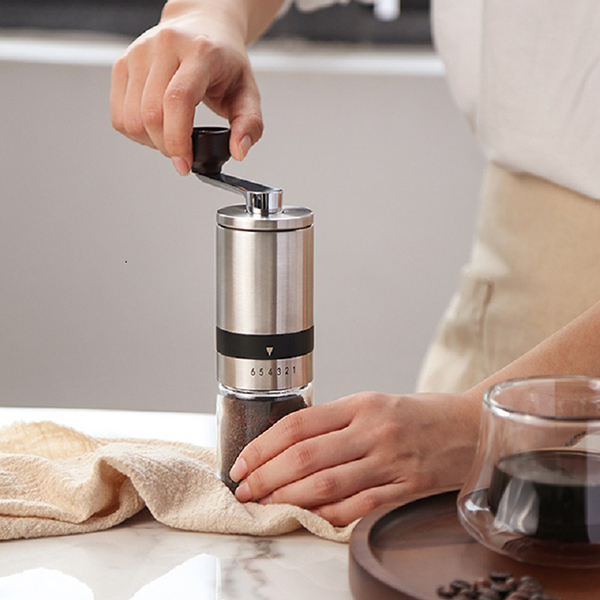
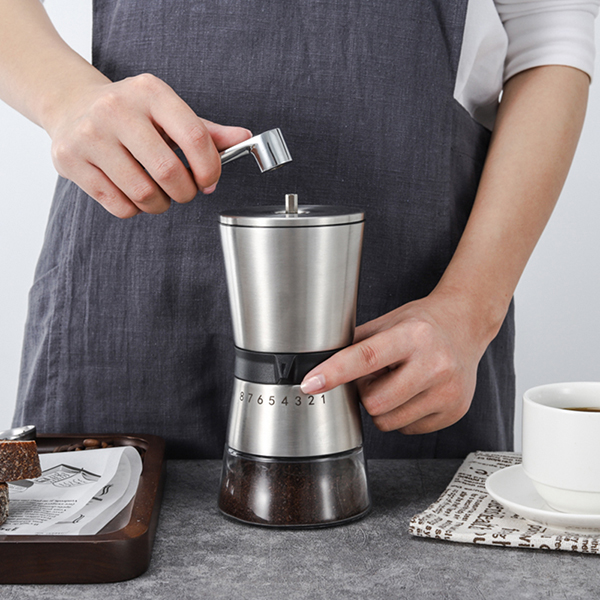
Despite these limitations, these portable grinders remain highly practical in coffee shops for preparing specialty coffee, tasting events, or small-batch pour-over coffee. They are affordable, portable, and allow baristas to precisely control the grind size, thereby meeting the demands of specialty coffee.
Commercial Electric Coffee Grinders
For high-volume coffee production, commercial electric grinders are indispensable. Designed for continuous use, they grind coffee beans quickly and evenly, meeting the demands of preparing multiple shots of espresso or brews in succession.
Well-known brands trusted by coffee shops worldwide include:
Mazzer—reliable grinders with adjustable settings
Fiorenzato—high-performance grinders built for specialty coffee shops
Compak—versatile grinders suitable for busy environments
These grinders ensure that high-volume coffee shops can maintain consistent coffee quality without slowing down service.

Combining Manual and Commercial Grinders
Small coffee shops typically use a hybrid grinding approach: commercial electric grinders are used for large volumes of espresso or drip coffee, while manual coffee grinder or portable electric coffee grinders are used for specialty coffees, small batches, or coffee intended for tasting. This approach ensures both efficiency and quality.
Advantages of Using Manual Grinders in Cafés:
Precise control over grind size
Freshly ground just before brewing, ensuring freshness
Portable, making them convenient for service or demonstrations
Lower initial costs for small batches or experimental products

Factors to Consider for Small Coffee Shops
When selecting a coffee grinder for a small coffee shop, there are several practical factors—beyond price—that should guide your decision.
Grinder Capacity and Throughput
The output of coffee grinders (i.e., the amount of coffee they can grind per hour) varies significantly. Small cafés typically have fewer customers than large chain cafés, so a mid-sized commercial grinder is usually sufficient to meet grinding capacity needs while also saving counter space.
Grind Size Adjustment
Menu diversity requires flexibility. A grinder capable of precise grind size adjustment ensures beans are ground to the ideal coarseness for espresso, pour-over, or French press. A grinder with multiple grind settings helps baristas maintain consistent coffee quality regardless of the brewing method used.
Ease of Use and Consistency
Baristas in small cafes may not have the same level of specialized training as those in high-end specialty shops, so a grinder with intuitive operation and clear settings can minimize errors. Grind consistency is critical: even subtle differences can affect flavor extraction, which in turn impacts the customer’s overall experience.
Maintenance and Durability
Daily use wears down grinder components. Ceramic or stainless steel burrs are preferred for their corrosion resistance and long lifespan. A design that is easy to clean minimizes downtime and ensures your café operates efficiently. Additionally, reliable after-sales support and ample replacement parts are essential for maintaining uninterrupted operations.
Noise Level
Small cafés are often located in intimate spaces, making noise a particularly important consideration. Some grinders are extremely loud and can disrupt the in-store atmosphere. Choosing a low-noise grinder not only enhances the customer experience but also creates a more comfortable working environment for baristas.
Practical Tips for Choosing a Coffee Grinder
To select the right coffee grinder for your café, follow these practical steps:
Assess your daily coffee volume:
Calculate your average daily beverage volume. Your grinder should be able to handle peak hours while ensuring service speed isn’t compromised and grind consistency is maintained.
Consider Menu Variety:
If your café offers multiple brewing methods, ensure the grinder can precisely adjust to different grind sizes. This is especially important if you serve both espresso and pour-over coffee.
Test Grind Consistency:
Whenever possible, watch a live demonstration of the grinder in action. Observe whether the grind is consistent, if the settings are easy to adjust, and if the machine operates smoothly.
Budget and Return on Investment:
The initial investment in a high-quality grinder may be higher, but the long-term benefits—such as consistent coffee quality, reduced waste, and a smoother workflow—make it a worthwhile investment. Cheap grinders, on the other hand, can lead to inconsistent quality and maintenance issues, ultimately increasing replacement costs.
Check Space and Footprint:
Counter space is often limited in small cafes. When selecting a grinder, consider whether it fits your layout without disrupting workflow.
Assess Noise and Vibration:
A quieter grinder enhances the customer experience. Some grinders also feature anti-vibration designs to prevent coffee beans from spilling or the machine from shaking.
Brands like Chinagama and others offer portable coffee grinders specifically designed for small cafes. These grinders typically combine durable ceramic burrs, easy cleaning, adjustable grind settings, and low noise levels.
