



How to Choose an OEM Supplier for Electric Salt and Pepper Grinders with the Best MOQ
Electric salt and pepper grinders have become a mainstream kitchen essential in Europe and North America. As demand keeps rising, many brands are exploring OEM solutions to launch their own electric grinders. However, for most emerging brands or businesses entering the category for the first time, high Minimum Order Quantities (MOQ) often become the largest barrier.
How can you identify a supplier that supports low MOQ while still ensuring stable quality, strong engineering, and flexible manufacturing? How do you avoid inventory pressure and unnecessary upfront costs caused by unreasonable MOQ? This article provides a comprehensive, professional framework—from supply chain and product structure to testing and OEM workflows—to help you evaluate electric grinder OEM suppliers with confidence.
1. Why “MOQ Flexibility” Has Become a Key Criterion for Selecting Electric Grinder OEM Suppliers
In recent years, the electric grinder market has shown strong growth driven by:
-
Consumer preference shifting from manual to electric grinders
-
Rising gift-set demand during holidays
-
Kitchen appliance simplification and focus on convenience
-
Increasing number of new brands testing new SKUs
These trends significantly increase OEM demand, but also expose several pain points:
-
Brands often start with small batches to test the market.
-
Inventory risk rises due to SKU expansion.
-
Cash flow pressure becomes heavier when MOQ is too high.
-
Cross-border brands prefer frequent, smaller replenishment cycles.
As a result, an OEM supplier’s flexibility in MOQ has become an essential competitive advantage.

2. What Factors Determine MOQ for Electric Salt & Pepper Grinder OEM Projects?
Compared with manual grinders, electric grinders are more complex due to electronic components, injection parts, and structural modules. Understanding these factors helps explain why MOQ varies among suppliers.
1. Electronic Components (Motor, PCB, Circuitry, LED)
-
Motor suppliers usually require 1,000 pcs or more minimum purchase.
-
PCB factories also enforce batch-based MOQ.
-
LED lights, wiring, and battery compartments follow similar patterns.
A supplier with strong supply-chain integration may have shared inventory or long-term upstream agreements—allowing lower MOQs.
2. Injection-Molded and Metal Components
Electric grinders typically use ABS housings, transparent spice containers, and stainless-steel shells:
-
Injection molding requires startup costs; small batches drive unit cost up.
-
Metal processing and finishing (brushing, polishing, coating) are also batch-based.
If the factory already owns mature molds and structures, MOQ can be reduced significantly.
3. Packaging Material MOQ
Packaging suppliers commonly require:
-
Color boxes: 500–2000 pcs
-
Manuals: 500–2000 pcs
-
Stickers/inserts: 500–3000 pcs
Thus packaging customization directly influences MOQ.
4. Production Flexibility and Line Scheduling
Factories with flexible lines, modular tooling, and mixed-model scheduling can support lower batches.

3. How to Evaluate Whether a Supplier Truly Supports Low MOQ
Below is a high-value evaluation guide useful for B2B buyers.
1. Do They Support Small Trial Orders?
A high-quality supplier typically offers:
-
50–200 pcs trial or pilot orders
-
Semi-custom or ready-to-ship variants
-
Options for fast market validation
2. Do They Offer Mature Structural Designs?
Benefits of mature platforms include:
-
No tooling needed
-
Fully validated electrical structure
-
Partial inventory of modules
-
MOQ can drop to 500–1000 pcs
3. Do They Manufacture Key Components In-House (e.g., Ceramic Mechanisms)?
In-house capability means:
-
Lower reliance on external high-MOQ components
-
Better cost control
-
Higher stability and long-term availability
4. Do They Have a Complete Electronic Quality System?
Look for:
-
Incoming QC for motors, PCBs, metal parts
-
Full-function PCB testing
-
Motor lifetime test, noise test, salt spray test
-
Experience with CE, RoHS, FCC requirements
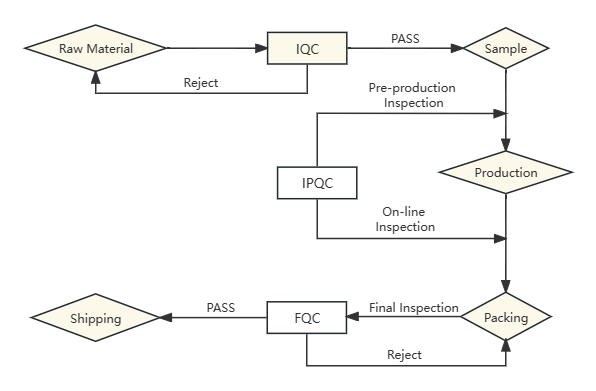
(our quality control system)
5. Is the OEM Configuration Transparent and Flexible?
Check whether they offer standardized OEM options:
-
Logo
-
Colors and surface finishing
-
Packaging formats
-
Gift-set assembly options
More standardization = lower MOQ.
6. Do They Have Proven Experience Serving EU/US Brands?
Experienced suppliers understand testing requirements, retail expectations, and cost structures—making MOQ more reasonable.
4. Industry-Standard MOQ Reference for Electric Grinder OEM
Below is a general industry reference range:
-
Logo OEM (laser/print): 300–500 pcs
-
Color OEM (no structural change): 500–1000 pcs
-
Packaging customization: 500–2000 pcs
-
Minor structural tweaks (no new tooling): 1000–3000 pcs
-
New structural development (with tooling): 3000–10000 pcs
Suppliers with mature self-developed structures tend to offer lower MOQ.

5. How to Reduce OEM Costs and Inventory Risks
1. Transparent Costing
Professional suppliers provide:
-
Component cost breakdown
-
Packaging cost structure
-
Logistics recommendations
2. Inventory & Production Flexibility
Examples:
-
Partial shipment options
-
Material pre-reservation
-
Shared inventory for standard components
3. Product Maturity
Mature designs ensure:
-
Lower failure rate
-
Stable cost
-
Shorter lead time
4. Quality & Durability Framework
Strong suppliers offer:
-
Grinder mechanism lifetime data
-
Motor endurance results
-
Salt-spray anti-corrosion tests
-
Noise and stability evaluations
6. Why Chinese Suppliers Can Offer More Reasonable MOQ
1. Highly Developed Electronics & Plastics Supply Chain
China’s integrated supply chain reduces cost and MOQs.
2. Strong R&D and Automation
Factories are investing in automatic lines, self-developed mechanisms, and modular designs—crucial for flexible MOQ.
3. High Customization Capability
Fast response for colors, surface finishing, packaging, logo, and set configurations.
4. Rich Export Experience
Suppliers are familiar with EU/US regulations and certified testing, reducing project risk.
7. A Practical Checklist for Selecting a MOQ-Friendly OEM Supplier
Use this 10‑point checklist:
-
Do they support trial orders (50–200 pcs)?
-
Do they have mature structural platforms?
-
Do they produce core components in-house?
-
Do they have a complete electronics QC system?
-
Do they clearly explain their MOQ logic?
-
Are they capable of flexible scheduling?
-
Is their cost structure transparent?
-
Do they have EU/US brand experience?
-
Do they understand international safety standards?
-
Can they ensure stable long-term supply?
If a supplier meets 7 or more of these points, they are generally a strong candidate.
8. Conclusion
Choosing an OEM salt and pepper grinder supplier with reasonable MOQ, strong product maturity, and solid supply-chain capabilities is the key to success when launching a new electric salt and pepper grinder. A competent partner not only reduces upfront investment, but also accelerates R&D, improves quality control, and enhances replenishment efficiency.
For brands planning to launch new electric grinder products, using this structured evaluation framework will help you secure a reliable, flexible, and long-term manufacturing partner.

Brant – Design Director
English version:
Brant brings over 20 years of expertise in product research and structural design. As Design Director, he leads the development of our product lines, driving innovation that has resulted in more than 400 patents. With his well-rounded skillset and strong leadership, Brant has built a reputation as a highly respected figure in the kitchenware industry.- Email:sns@garron.cn
- Phone: +86-0574-27729216