

⚙ Regulatory Framework & Core Conclusion
In international hardware and kitchenware procurement, compliance verification is a fundamental baseline rather than a secondary formality. All spice-contact parts of a compact spice grinder must meet strict food contact compliance; missing or incomplete certification instantly triggers customs clearance risk, confiscation, and severe border rejection penalties for bulk procurement programs. Every component comprising a commercial-grade compact pepper grinder—ranging from the high-torque ceramic or stainless steel rotary mechanism to the polymeric adjustment dial and the storage reservoir—operates under direct friction and pressure in the presence of culinary substances. Engineering-level material verification guarantees that neither micro-particulates nor toxic chemical compounds migrate into the milled condiment.
When procuring a precision-engineered compact pepper grinder at scale, sourcing departments must thoroughly interrogate supplier production pipelines. Global customs agencies, including the US FDA and EU port inspection directorates, continuously heighten analytical screenings for heavy metals, plasticizers, and overall migration limits. A failure to provide verifiable test data from an accredited independent laboratory halts import workflows, imposes storage demurrage, and voids warranty liabilities across corporate retail distribution networks.
🔍 Food Contact Component Identification
A comprehensive breakdown of an industrial compact pepper grinder assembly requires isolating food contact surfaces (FCS) from non-contact chassis segments. Each component must be individually analyzed and matched to dedicated certification dossiers:
Ceramic & Stainless Burrs
Core grinding mechanism subjected to direct mechanical shear. Alumina (Al₂O₃) ceramics require lead/cadmium leach testing; Austenitic stainless steels (SUS304/SUS316) require strict toxic element alloy composition verification.
Food Grade Glass Jar
High-density soda-lime or borosilicate glass intended for spice containment. Must undergo extractable lead and cadmium release testing under acidic simulant regimes without heavy metal surface glazes.
Polymer Gaskets & Screws
Drive shafts, internal retaining rings, adjustment knobs, and sealing rings made from POM, ABS, or PP. Requires overall migration limit (OML) and specific migration limit (SML) tests for bisphenols and phthalates.
Mechanical engineers designing or specifying a compact pepper grinder must ensure that structural wear tolerances do not produce microscopic shavings during dry-run friction cycles. Ensuring mechanical alignment reduces internal contact friction, ensuring that compliant raw materials perform predictably throughout standard multi-year service lifecycles.
📊 Mandatory Food-Grade Certification Standard List
Procurement engineers and quality assurance heads must validate compliance against target market jurisdictions before authorizing final production runs for any compact pepper grinder. The following matrix illustrates the multi-region landscape governing raw and assembled contact materials.
| Target Region | Governing Directive / Standard | Target Component | Critical Test Metric | Pass/Fail Threshold |
|---|---|---|---|---|
| United States | FDA 21 CFR Part 177 / CPG 7117.06 | Ceramic Grinder & Glass Jar | Extractable Lead / Cadmium | < 0.5 µg/mL (Lead release limits) |
| European Union | Regulation (EC) No 1935/2004, (EU) 10/2011 | Internal Plastic Mechanism (POM/PP) | Overall Migration Limit (OML) | ≤ 10 mg/dm² or ≤ 60 mg/kg |
| Germany (BFR) | LFGB (Lebensmittel-, Bedarfsgegenstände) | Sensory, Polymer Components, Burrs | Sensory Test, Polycyclic Aromatic Hydrocarbons | No perceptible organoleptic transfer (Score ≤ 2.5) |
| France | DGCCRF 2004-64 | Stainless Steel Shaft & Screws | Corrosion, Ni / Cr Release | Specific release limit (SRL) met under 0.5% Citric Acid |
| Global / Multi | ISO 8442-2 / Regulation (EC) 2023/2006 | Whole Assembled Grinder Mechanism | Good Manufacturing Practice (GMP) | Zero foreign metal or lubricant cross-contamination |
🔬 Certification Document Verification Method
Unscrupulous vendors frequently leverage secondary declarations, forged reports, or outdated factory certifications. Sourcing specialists evaluating a prospective compact pepper grinder assembly must execute a systematic four-stage document validation:
1. QR & Report ID Verification
Directly verify test report identifiers across laboratory portal registries (e.g., SGS, TÜV Rheinland, Intertek). Forged PDF documents often feature misaligned fonts, missing test lab contact details, or altered batch numbers.
2. Bill of Materials (BOM) Cross-Check
Compare every component enumerated in the test report against the engineering BOM. If the compact pepper grinder utilizes a specific POM resin grade, that identical molecular identifier must appear on raw material declarations.
3. Simulation Regime Applicability
Spices contain volatile essential oils and lipophilic matrices. Verify that polymer tests employed appropriate food simulants (Simulant D1/D2 for fatty/oily substances, Simulant B for 3% acetic acid) rather than solely relying on generic water (Simulant A).
4. Temporal Validity Thresholds
Ensure testing reports date within 12 to 24 months. Material suppliers routinely alter plasticizer carriers or stabilization additives. An expired test dossier renders the entire compact pepper grinder consignment non-compliant under EU customs law.
⚠️ Common Non-Compliant Material Risks in Compact Grinders
In the compact form factor of a compact pepper grinder, mechanical clearances are tight and mechanical stresses are concentrated. Using sub-standard materials introduces notable structural and chemical hazards:
Reground Resins & Phthalates
Unregulated factories often mix post-industrial regrind plastic into POM or ABS adjustment knobs. This introduces unmonitored plasticizers, non-food colorants, and heavy metals that easily migrate into peppercorns, causing rapid customs rejection.
Sub-par Stainless Steels (SUS201 vs SUS304)
Substituting food-grade SUS304 with inferior SUS201 stainless steel in the drive spindle or internal springs results in oxidation from moisture and organic acids naturally found in spices. Rust transfer violates both FDA and LFGB mandates.
High-Lead Ceramic Formulations
Poorly calcined low-grade ceramic cores utilize chemical binders and sintering fluxes high in lead (Pb) and cadmium (Cd). Over repeated grinding of hard black peppercorns, mechanical micro-chipping can transfer toxic particulates into ground condiments.
📋 Third-Party Test Report Requirement & Protocol
To maintain an uncompromised supply chain, the QA division must stipulate that the manufacturer provides verifiable test reports originating exclusively from ILAC-MRA accredited international third-party institutions. Testing must encompass both static containment analysis and dynamic simulation.
Static containment tests evaluate the glass or acrylic storage basin, verifying zero chemical migration during extended warehouse holds. Dynamic mechanical wear tests assess the burr set of the compact pepper grinder through simulated 5,000-cycle rotational tests, measuring organoleptic stability and macroscopic residue generation. Self-issued manufacturer certificates of compliance (CoC) lack legal standing without an accompanying ISO/IEC 17025 accredited laboratory test report detailing explicit methodology and quantitative limits.
✅ Summary: Food-Grade Certification Audit Checklist
Prior to approving initial tooling samples or releasing bulk letters of credit for any compact pepper grinder shipment, quality teams should execute this definitive checklist:
- All components touching spice documented on detailed assembly drawing.
- FDA 21 CFR migration report verified for US port clearance.
- LFGB compliance dossiers validated for Germany & Central EU distribution.
- Glass vessel lead/cadmium extraction tests verified within safety thresholds.
- Plasticizer (Phthalate / BPA) free certification verified on all polymeric parts.
- Stainless steel drive components certified to SUS304 or higher specification.
- Third-party laboratory accredited under ISO/IEC 17025 standard.
- Test report batch identifiers match factory raw material delivery logs.

Commercial-Grade Compact Pepper Grinder Line
Engineered specifically to solve high-compliance challenges for international bulk distributors. Features our patented non-wearing alumina ceramic mechanism, soda-lime food contact jar, and virgin polymer dial assemblies. Pre-tested against FDA, LFGB, and DGCCRF mandates for frictionless global clearance.
🏭 Manufacturing Infrastructure & Quality Engineering
Compliance starts on the manufacturing floor. Chinagama maintains advanced, vertically integrated production operations to guarantee that every compact pepper grinder rolling off automated lines adheres strictly to international chemical and mechanical tolerances.

Pioneering Culinary Innovations
At Chinagama, we are passionate about crafting high-quality and stylish kitchenware, specializing in salt and pepper grinders. Of course, we also manufacture other kitchenware items sought after by buyers, including coffee grinders, oil dispensers, soap dispensers, and more.
Since our establishment in 1997, we have been dedicated to delivering exceptional kitchenware development and manufacturing. Over the years, we have achieved over 300 patents and our meticulously designed and produced kitchen tools have been honored with the Red Dot Award and IF Design Award. We continue to innovate with new products to cater to evolving needs.

Our Commitment to Quality
With the expertise of our dedicated R&D team and the support of our in-house factory, our products undergo rigorous quality control measures from conception to completion, ensuring that each item meets industry standards with precision. As a testament to our commitment, we have garnered recognition from renowned international third-party testing companies, including prestigious LFGB and FDA certifications. This validates the exceptional quality of our products and reinforces our dedication to delivering excellence to our customers.
Global Success Stories
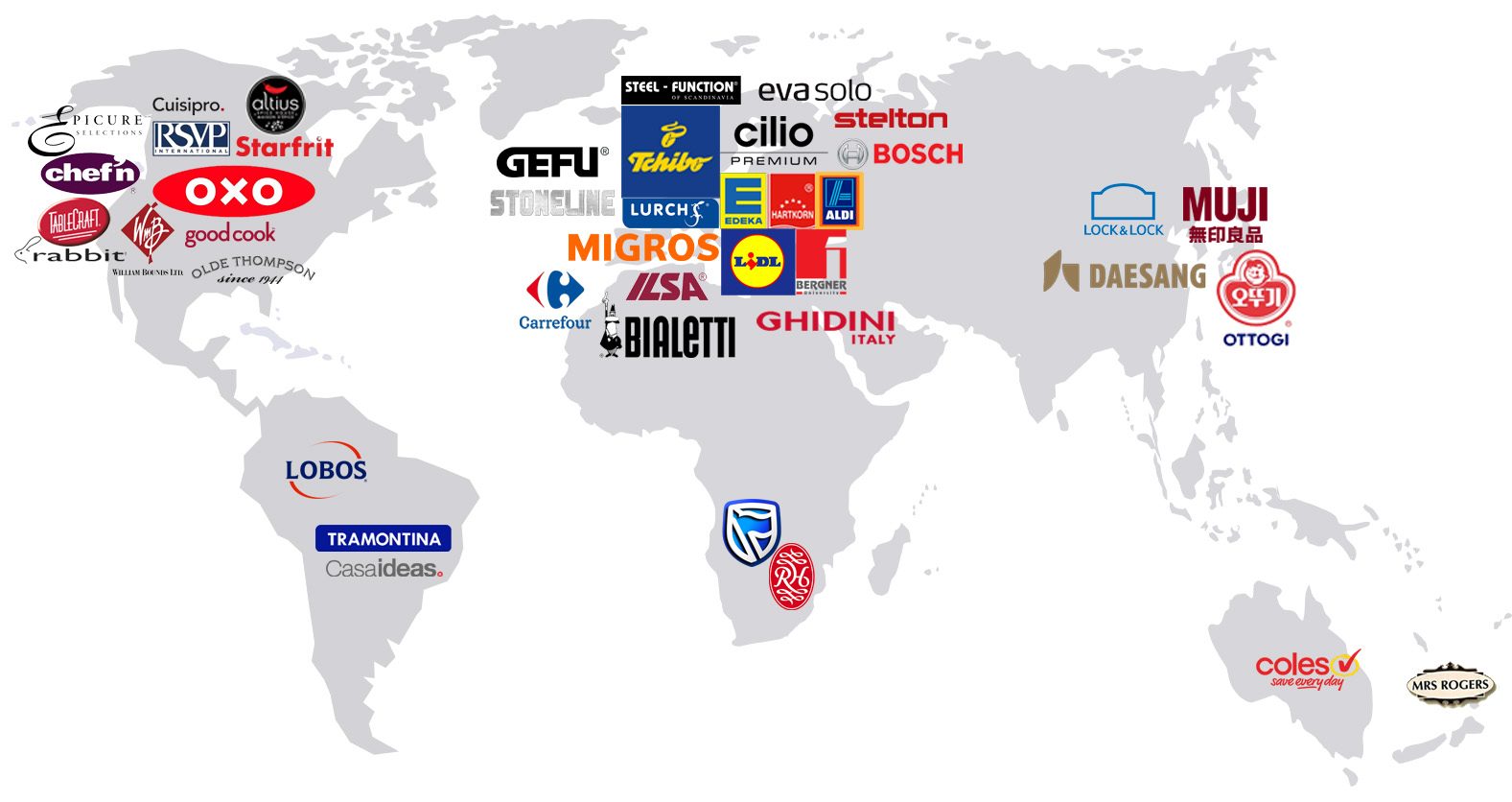
With a strong emphasis on quality, Chinagama has fostered successful partnerships with global clients, selling over 12 million pepper grinders annually. Every three seconds, a Chinagama product finds its way into the hands of satisfied customers worldwide.
From our entry into online trade in 2001 to the establishment of our standardized food-grade production plant in 2012, our production practices have adapted continuously to international market standards.
📜 Enterprise Evolution & Corporate Foundations
Our Journey
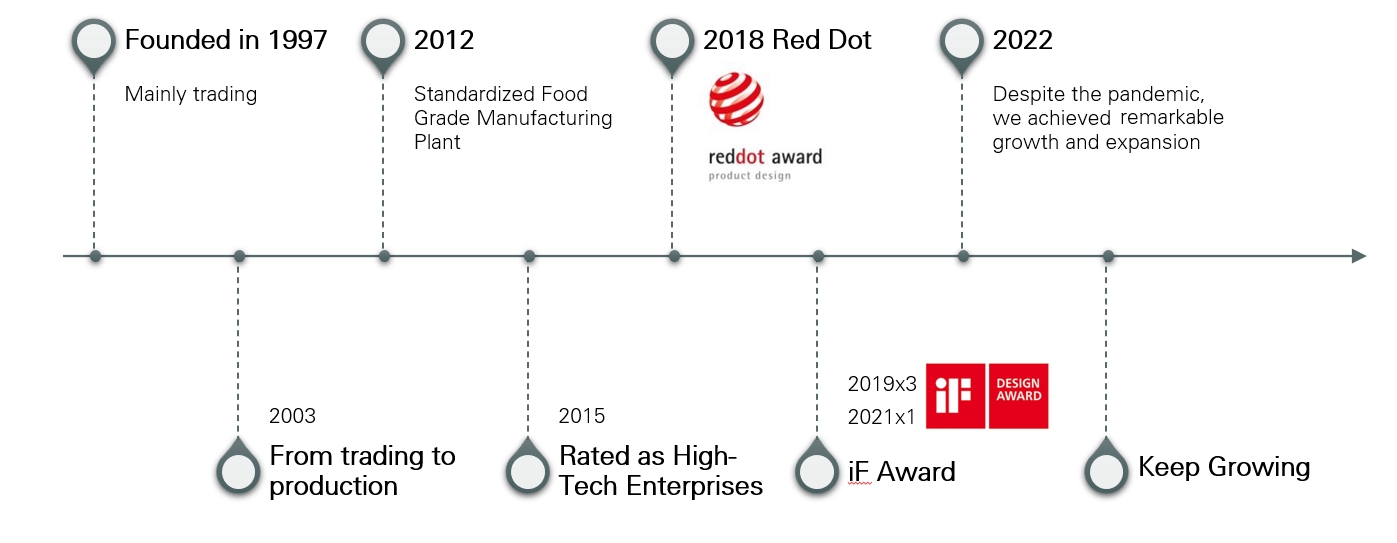
In 1997, Chinagama embarked on its remarkable journey, initially focusing on trade work. With a keen eye for opportunities, in 2001, we embraced the emerging realm of online trade and set forth on a path of vigorous development.
Passion for Culinary Excellence and Kitchen Utensils: Driven by our passion for cooking and kitchen utensils, in 2003, we made a transformative shift from trade to production. This pivotal decision led us to establish a standardized food-grade production plant in 2012, empowering us to continuously innovate and introduce new, quality-driven products.
Evolving with Innovation: In 2015, our relentless pursuit of excellence was rewarded as we earned the prestigious title of a high-tech enterprise. Since then, our products have been consistently honored with the coveted Red Dot Awards and IF Design Awards, affirming our commitment to cutting-edge design and craftsmanship.
Continuing the Journey: Our journey doesn't end here. Chinagama continues to forge ahead, driven by a steadfast dedication to surpassing expectations and delivering exceptional kitchenware solutions to our global customers. Join us in celebrating our past achievements and look forward to the inspiring chapters yet to be written in our story of culinary innovation and excellence.
Our Vision
To become the preferred supplier of premium kitchen grinding tools for mid-to-high-end brands around the globe, setting the standard for quality, design, and performance.
Our Mission
We are committed to helping our customers overcome challenges by providing more competitive grinding solutions and customized services. With a deep understanding of industry needs and continuous innovation, we strive to enhance brand value and become a trusted long-term partner for our customers.
Our Values
Focus: We are dedicated to mastering the art and science of grinding tools, striving for excellence from concept to production.
Innovation: We believe that forward-thinking design and technological innovation are key to achieving sustainable growth and long-term value.
Sustainability: We prioritize responsible manufacturing practices and the development of eco-friendly products to minimize our environmental footprint.
Win Together: We are committed to building partnerships that create value and foster long term, shared success.
❓ Frequently Asked Questions: B2B Compliance & Engineering
Clear answers on food-grade protocols for sourcing professionals procuring a compact pepper grinder program.