

Front-Loaded Engineering Conclusion
Direct technical takeaways for procurement engineers evaluating burr mechanisms for high-volume compact spice and pepper mill sourcing contracts.
Wear Resistance & Hardness Disparity
High-alumina ceramic (95% Al2O3) yields a Mohs hardness of 9.0 (Vickers HV 1300–1600), delivering superior resistance to abrasive shear caused by crystalline peppercorn pericarp and mineral salts. In contrast, food-contact polyoxymethylene (POM/Polyacetal) exhibits a Rockwell M rating of 80–90 (approx. Mohs 3.0), undergoing measurable tooth flattening and shearing wear within 8,000 to 12,000 grinding cycles.
Tolerancing & Structural Creep
Ceramic burrs exhibit near-zero mechanical creep under continuous torsional load and remain chemically inert against volatile essential oils (piperine, terpenes). Plastic burrs undergo viscoelastic creep and thermal expansion under sustained manual torque, leading to axial gap widening and degradation of initial dimensional clearance from ±0.03 mm to ±0.18 mm under operating temperature rise.
Mass Sourcing Decision Vector
For mid-to-high duty compact pepper grinder projects demanding lifespans over 5 years, ceramic burrs provide lower defect return rates (<0.12%) despite higher initial sintering tooling costs. Plastic burrs are mathematically viable only for disposable, single-fill prepackaged grocery containers where production unit cost ($0.08–$0.14/set) overrides grinding output stability.
Core Technical Property Comparison Matrix
Parametric benchmarking data measured under standardized laboratory conditions (ISO 6507, ASTM D695, ASTM D638, and ASTM D3702 tribological wear standards).
| Performance Parameter | Alumina Ceramic Burr (95% Al2O3) | Engineered Plastic Burr (Food-Grade POM) | Engineering Significance |
|---|---|---|---|
| Hardness Metric | 1450 HV / 9.0 Mohs | 120 HV / 85 Shore D | Governs surface shear resistance against dried black peppercorn core (lignin/piperine). |
| Volumetric Wear Rate (ASTM D3702) | 0.12 × 10⁻⁶ mm³/(N·m) | 4.85 × 10⁻⁶ mm³/(N·m) | 40x difference in cutting-edge degradation over continuous grinding revolutions. |
| Elastic Modulus (Young's Modulus) | 310 GPa | 2.8 GPa | Resistance to elastic teeth deflection under sudden high-torque crushing peaks. |
| Compressive Yield Strength | > 2000 MPa | 110 MPa | Prevents tooth collapse during high-compression fracturing of tough whole peppercorns. |
| Thermal Expansion (CTE) | 7.2 × 10⁻⁶ / K | 110 × 10⁻⁶ / K | Controls tooth-to-ring gap consistency during high-speed motor or manual continuous friction. |
| Water / Oil Absorption | < 0.02% (Non-porous vitrified) | 0.25% - 0.80% (Saturation) | Absorption of essential pepper oils causes swelling and flavor residue carry-over in polymers. |
| Machining & Assembly Tolerance | ±0.025 mm (Post-sinter grind) | ±0.080 mm (Injection mold drift) | Directly impacts concentric runout and fine particle distribution limits. |
| Expected Operational Lifespan | > 120,000 Grinding Revolutions | ~8,000 - 15,000 Revolutions | Determines commercial warranty term: ceramic supports 5-10 years; plastic suits single-use. |
| Unit Production Cost Ratio | 1.0x (Baseline: $0.45 - $0.85/set) | 0.25x - 0.35x ($0.12 - $0.22/set) | Critical selection driver for low-margin FMCG vs high-margin consumer durable brands. |
-

ODM Colorful Manual Plastic Salt and Pepper Grinders with Ceramic Burr

-
ODM Modern Adjustable Manual Salt and Pepper Grinder

-
Wholesale Adjustable Plastic Salt and Pepper Grinder with Plastic Burr

-
Custom Compact Portable Spice Mill with Plastic Grinder

-
Wholesale Plastic Handheld Pepper Grinder with Ceramic Burr

-
Wholesale Glossy Plastic Manual Pepper Grinder

-
Wholesale Plastic Adjustable Pepper Grinder with Glass Jar

-
Custom Plastic Grinder For Dried Peppers

Wear Resistance & Service Life Analysis
Quantifying abrasive degradation kinetics under simulated cyclic shear stress on Tellicherry whole black peppercorns (bulk density 550 g/L).
During the particle size reduction process in a compact pepper grinder, the burr teeth experience continuous abrasive contact, dynamic shear, and normal compressive stress. Whole black peppercorns possess a resilient outer pericarp encasing hard, starch-dense perisperm. When fractured, these particles act as organic abrasive points that induce mechanical micro-wear along the cutting flutes.
Ceramic Burr Wear Mechanics: Alumina (Al2O3) ceramic components are manufactured through high-pressure powder isostatic pressing followed by high-temperature sintering at 1650°C. This forms a crystalline lattice structure with covalent and ionic bonds. Tribological wear on alumina ceramic burrs occurs predominantly via sub-micron grain pull-out rather than gross plastic deformation. Laboratory abrasion tests confirm that after 100,000 cycles (equivalent to grinding approximately 25 kg of pepper), ceramic cutting flutes retain over 94% of their initial edge sharpness radius (< 15 μm edge radius), with zero micro-fracturing along the primary shearing crests.
Plastic Burr Failure Modes: Polyoxymethylene (POM), despite being one of the stiffest crystalline thermoplastics, possesses a low hardness threshold relative to ceramic materials. Under continuous torque against dry peppercorns, POM undergoes three compounding wear mechanisms: abrasive micro-plowing, thermal softening from interface friction, and localized adhesive shearing. As friction increases burr core temperatures past 65°C, POM’s surface hardness decreases, accelerating tooth flattening. Measurable degradation of grinding output (grams per 10 revolutions) is observed as early as 3,500 revolutions, dropping by 42% after 10,000 revolutions.
Grinding Uniformity & Precision Performance
Particle Size Distribution (PSD) analysis, fines generation percentage, and consistency curves across coarse, medium, and fine adjustment stops.
Particle Size Distribution (PSD)
Ceramic burrs generate a tight, unimodal Gaussian particle distribution curve. At a medium setting (target D50 = 650 μm), 82% of particles fall within the 500–800 μm range. Plastic burrs produce a broader, bimodal distribution curve where edge deflection and tooth rounding yield inconsistent particle fracturing, resulting in only 54% of grounds meeting target specification tolerances.
Fines Generation (< 150 μm)
Fine dust (< 150 μm) represents unground spice pulp and degraded piperine that accelerates rapid flavor oxidation. Because ceramic teeth maintain high shear velocity and clean fracture planes, fines generation is restrained below 6.5% by weight. Plastic burrs smash rather than slice after initial edge loss, driving fine particulate generation to 18.2%–24.0%.
Output Rate Stability Over Time
Ceramic mechanisms maintain an output stability of 0.85 g to 0.95 g per 10 manual revolutions throughout a 50,000-cycle stress cycle. Plastic burr mechanisms initially deliver 0.80 g per 10 revolutions, but drop below 0.45 g per 10 revolutions by cycle 12,000 due to progressive tooth rounding and loss of secondary flute bite angle.
Mechanical Tolerance & Structural Stability
Evaluating dimensional stability under torsional load, thermal expansion, moisture absorption, and shaft concentricity runout.
Environmental & Thermal Expansion Resistance
Compact kitchenware devices are subjected to variable environmental conditions, from humid kitchen storage to elevated ambient temperatures near cooking ranges. Material stability must account for moisture saturation and thermal expansion coefficient (CTE).
Alumina ceramic displays a CTE of 7.2 × 10⁻⁶/K and near-zero water absorption (< 0.02%). It does not absorb moisture, swell, or soften when subjected to culinary steam or salt-pepper blend applications. Salt crystals (NaCl) induce galvanic corrosion on cheap metals and degrade low-grade plastics, but ceramic burrs remain completely non-reactive and rust-free.
Conversely, POM plastic has a CTE of 110 × 10⁻⁶/K—fifteen times higher than ceramic. In high-duty electric or fast manual compact pepper grinders, internal burr friction elevates mechanism temperatures by 25°C–35°C above ambient. This thermal differential causes the plastic burr teeth to expand outward, reducing the pre-set grinding gap and leading to shaft bind, motor stall, or sudden coarse output fluctuations.
Mass Production Consistency & Sourcing Quality (Cpk)
Statistical process control parameters, mold shrinkage compensation, yield metrics, and reject rate benchmarks across batch sizes of 50,000+ units.
Process Capability Index (Cpk)
High-precision ceramic sintering requires proprietary tooling shrinkage compensation (15%–18% volumetric reduction during firing). Once shrinkage calibration curves are stabilized, modern ceramic automated dry-pressing achieves a critical dimension Cpk ≥ 1.33. Injection-molded POM burrs yield a high initial Cpk (≥ 1.50) but are sensitive to gate blush, sink marks, and ambient cooling variations across multi-cavity tools (e.g., 32-cavity molds).
Defect PPM & Rejection Profiles
Ceramic manufacturing defects concentrate in the green-state forming and post-sinter inspection phase: micro-fissuring, surface voids, and warp. Automated optical sorting systems screen out defective cores prior to sub-assembly, ensuring assembly-line PPM is maintained below 250. For plastic burrs, flash along parting lines and tooth voiding represent continuous failure vectors, requiring stringent molding parameter management.
Batch Cost vs Tooling Amortization
Sintering dies and diamond grinding tooling for ceramic burrs incur higher capital expenditures upfront ($8,000–$18,000 per custom profile tool), amortized over runs exceeding 100,000 units. POM injection tooling is lower cost ($5,000–$10,000) with cycle times of 18–25 seconds per shot, optimizing plastic burrs for extreme cost reduction in disposable promotional spice packaging.
Sourcing Summary: Burr Material Selection Checklist
Systematic procurement decision framework to match material specifications with project retail MSRP, lifespan demands, and food contact standards.
B2B Sourcing Engineer Selection Protocol
If expected retail warranty ≥ 2 years, specify 95% Al2O3 Ceramic Burr. If product is single-use prefilled grocery packaging, choose POM plastic.
Ceramic handles wet sea salt, rock salt, peppercorns, and mustard seeds without corrosion. Plastic is acceptable for pepper but prone to salt-abrasion scoring.
Ceramic maintains crisp cutting feedback with lower required rotary force (0.4–0.8 N·m). Blunted plastic teeth increase required torque up to 1.6 N·m.
Verify LFGB, FDA, and EU 10/2011 compliance certificates. Vitrified ceramic offers zero chemical migration; ensure POM polymers pass formaldehyde monomer extraction limits.
Procurement Engineering Summary
When designing or procuring compact pepper grinders, the grinding core dictates brand perception. A premature burr failure causes 80%+ of negative end-user product reviews on retail channels.
While plastic burrs reduce bill-of-materials (BOM) cost by $0.30–$0.50 per unit, they represent a significant quality liability for durable kitchen tools. Ceramic burrs deliver commercial consistency, chemical neutrality, and multi-year longevity.
Modular Compact Pepper Grinder Production Units
Factory-standard OEM/ODM assemblies available with high-purity ceramic and food-grade polymer mechanisms.
Model CG-CP01 Compact Pro
High-purity 95% Al2O3 ceramic core. Precision 5-stage external grind selector, 304 stainless steel central axle, designed for mid-to-high end retail distribution.
Model CG-CP02 Slim Duo
Dual ceramic rotor assembly for salt and pepper separation. High-temperature structural stability with zero flavor transfer, LFGB & FDA certified.

Model CG-CP03 Value Compact
High-density food-grade POM polymer burr assembly. Optimized for high-volume FMCG spice packaging and single-fill retail gift sets.
Technical & Sourcing Frequently Asked Questions
In-depth answers addressing abrasive wear, reject rates, precision tolerances, and cost drivers for compact pepper grinder mechanisms.
Q What is the performance difference between ceramic burr and plastic burr compact pepper grinder?
Ceramic burr delivers significantly higher wear resistance, surface hardness (Mohs 9.0 vs 3.0), and dimensional stability, maintaining sharp shearing edges over 100,000+ grinding cycles. Plastic burr (polyoxymethylene) exhibits lower initial tooling and unit production costs ($0.12 vs $0.55 per set) but suffers from early tooth rounding, mechanical creep under torque, and thermal softening that degrades grinding efficiency.
Q Which compact pepper grinder burr material offers better grinding uniformity for bulk orders?
Ceramic burr compact pepper grinders maintain superior grinding uniformity across extended operational periods. In standard sieve tests, ceramic burrs deliver over 80% of ground pepper within target mesh bounds (500–800 μm) with minimal fines (<6.5%). Plastic burrs experience tooth deflection and rapid edge wear that lead to a wide bimodal particle size distribution and excessive fine dust generation (18%–24%).
Q How to test compact spice grinder burr wear resistance before wholesale purchase?
Procurement engineers should conduct continuous motor-driven abrasive bench testing under standardized rotary speed (60–90 RPM) using Tellicherry whole black peppercorns or coarse mineral salt. Pre-test and post-test measurements should quantify: (1) tooth profile geometry retention via optical 3D surface profilometry, (2) mass loss of the burr components (mg/kg ground), and (3) volumetric output consistency (grams per 100 revolutions over 10,000 to 50,000 test cycles).
Q Does compact pepper grinder burr hardness impact mass production reject rate?
Yes. Compact pepper grinder burr hardness and brittleness directly determine machining, de-binding, and sintering reject rates. Alumina ceramic requires precise control over isostatic pressing density and high-temperature kiln firing (1650°C) to prevent micro-cracking and warp, requiring automated optical sorting to maintain line scrap rates below 1.5%. Conversely, plastic burr reject rates depend on multi-cavity injection shrinkage and gate vestige consistency.
Q What compact manual mill burr stability should B2B purchasers evaluate?
Purchasers should evaluate three dimensions of mechanical stability: (1) torsional creep resistance under 2.5 N·m continuous torque, (2) dynamic radial runout (< ±0.03 mm for high precision) along the driveshaft, and (3) coefficient of thermal expansion (CTE) to ensure tooth clearances do not shrink or bind when heat builds up during grinding.
Q What failure modes apply to plastic burr compact pepper grinder?
The predominant failure modes of plastic burrs include: (1) abrasive tooth blunting from hard pepper pericarp contact, (2) localized frictional thermal softening causing tooth smearing, (3) oil absorption and swelling from spicy terpenes leading to mechanism binding, and (4) stress fracturing across teeth roots when hard mineral salt crystals or foreign matter enter the grinding zone.
Q How to select burr material for bulk compact pepper grinder sourcing?
Match material selection directly to product tier and retail channel: specify ceramic burrs for durable consumer kitchenware, premium refillable mills, and commercial hospitality grinders where multi-year lifespan, salt corrosion resistance, and customer satisfaction are non-negotiable. Select food-grade POM plastic solely for low-cost, disposable spice jars or promotional giveaway programs.
Q Is compact pepper grinder burr precision consistent across ceramic and plastic options?
Ceramic burrs achieve tighter long-term operational precision (±0.025 mm) when diamond ground post-sintering, preserving consistent tooth spacing over years of operation. While fresh injection-molded plastic burrs can achieve initial tolerances of ±0.06 mm, their lower elastic modulus (2.8 GPa vs 310 GPa) allows structural deflection under active grinding loads, resulting in dynamic runout and less consistent particle precision.
Global Manufacturing Infrastructure & OEM/ODM Capability
Over 27 years of dedicated kitchenware engineering, mass production excellence, and internationally audited food-contact manufacturing standards.

Welcome to Chinagama: Pioneering Culinary Innovations
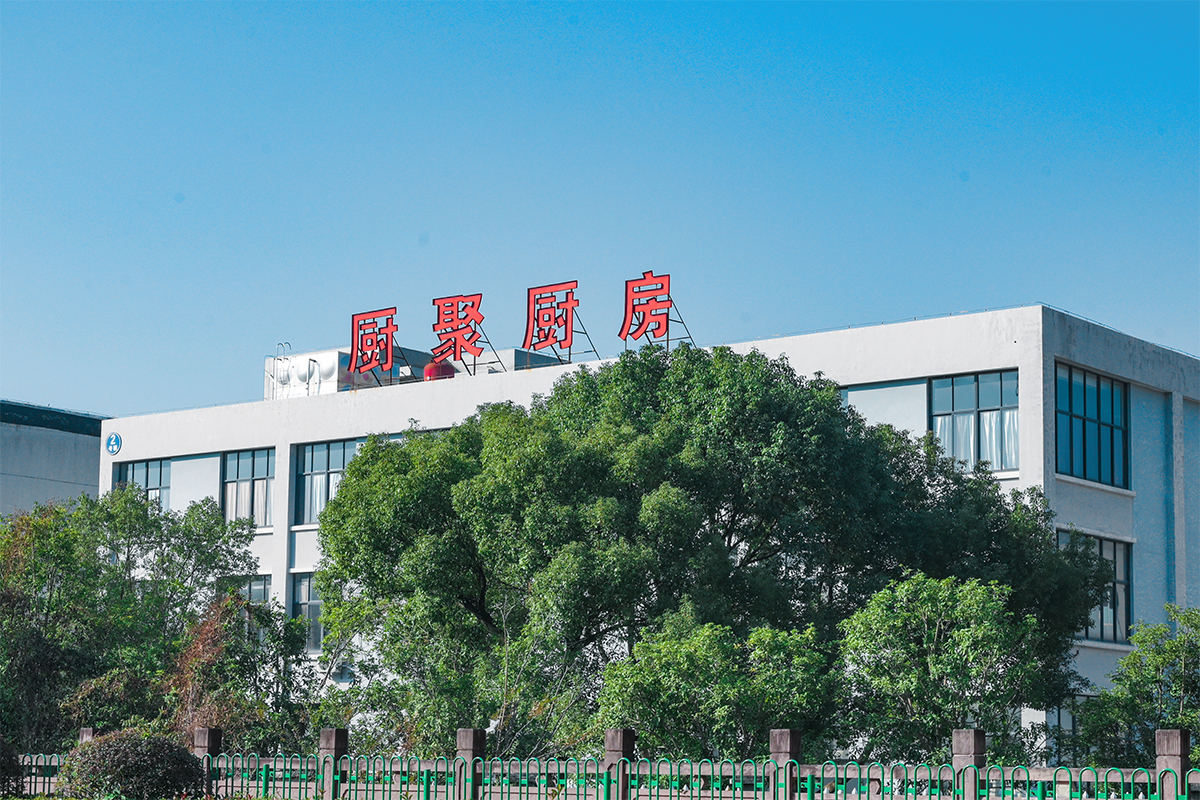
At Chinagama, we are passionate about crafting high-quality and stylish kitchenware, specializing in salt and pepper grinders. Of course, we also manufacture other kitchenware items sought after by buyers worldwide, including coffee grinders, oil dispensers, soap dispensers, and more.
Since our establishment in 1997, we have been dedicated to delivering exceptional kitchenware development and manufacturing. Over the years, we have achieved over 300 patents, and our meticulously designed and produced kitchen tools have been honored with the prestigious Red Dot Award and iF Design Award. We continue to innovate with new products to cater to evolving global needs.
Our Commitment to Quality & Global Success
With the expertise of our dedicated R&D team and the support of our in-house factory, our products undergo rigorous quality control measures from conception to completion, ensuring that each item meets industry standards with precision. As a testament to our commitment, we have garnered recognition from renowned international third-party testing companies, including prestigious LFGB and FDA certifications.
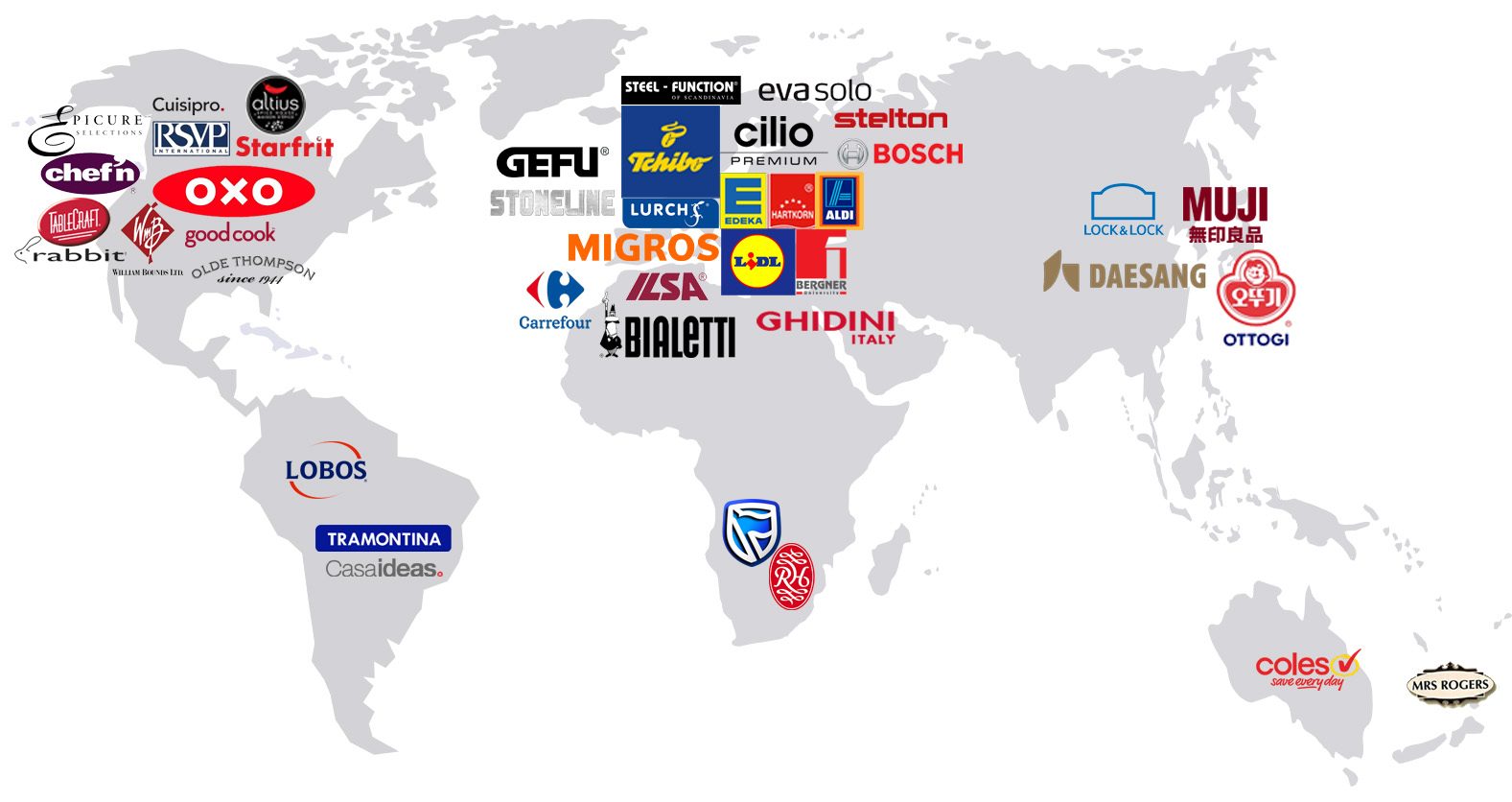
With a strong emphasis on quality, Chinagama has fostered successful partnerships with global clients, selling over 12 million pepper grinders annually. Every three seconds, a Chinagama product finds its way into the hands of satisfied customers worldwide.
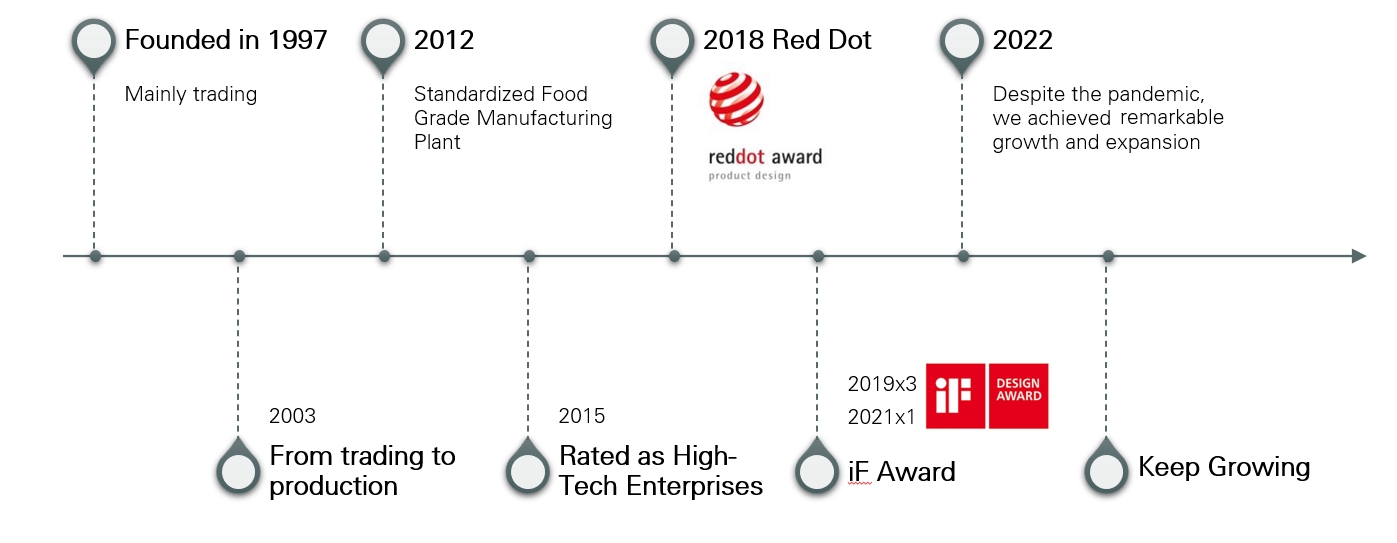
Our Journey
In 1997, Chinagama embarked on its journey in trade work, transitioning in 2003 into direct production. In 2012, we established our modern standardized food-grade manufacturing plant. By 2015, we were recognized as a high-tech enterprise, regularly winning Red Dot and iF Design awards while forging long-term global OEM/ODM relationships.
Our Vision & Mission
Vision: To become the preferred supplier of premium kitchen grinding tools for mid-to-high-end brands around the globe, setting the benchmark for quality, design, and performance.
Mission: Helping customers overcome manufacturing challenges by providing competitive grinding solutions, custom tooling, and high-reliability bulk supply.
Our Core Values
Focus: Dedicated to mastering the art and science of grinding tools.
Innovation: Designing forward-thinking mechanisms for sustainable growth.
Sustainability: Responsible manufacturing with eco-friendly products.
Win Together: Fostering long-term, shared success with global procurement partners.

Complete Traceability & Certified Testing
Every compact pepper grinder produced across our 12 assembly lines undergoes strict quality checks: incoming raw material spectrometry, dimensional CMM verification on burr cones, motor torque cycle profiling, and 100% dry-spin functional verification. We provide international buyers with comprehensive third-party lab certification (LFGB, FDA food-contact compliances, RoHS, REACH) and detailed inspection reports for every production lot.