


How Small Brands Can Test Private Label Kitchenware with Low MOQ
Launching a kitchenware brand sounds simple until product development begins.
A small brand may have a clear product concept, a target market, and a limited first-year budget. But turning that concept into a production-ready product can require much more than placing an order with a manufacturer. New product development may involve industrial design, structural engineering, prototypes, tooling, testing, packaging, and production setup.
This is where many small brands face a difficult choice. Standard catalog products are easier to order, but they may not give the brand enough differentiation. A fully customized OEM kitchenware product offers more freedom, but the development cost and minimum order quantity can make the first order difficult to justify.
For many brands, there is a middle ground. Working with an established ODM product, or customizing selected parts of an existing product, can reduce the initial investment while still giving the brand room to create something distinctive. The goal is not simply to find the lowest MOQ. It is to find a product development model that allows the brand to test the market without committing too much capital too early.
Why Full OEM Development Can Be Expensive for Small Brands
Full OEM development usually means creating a product specifically for a brand.
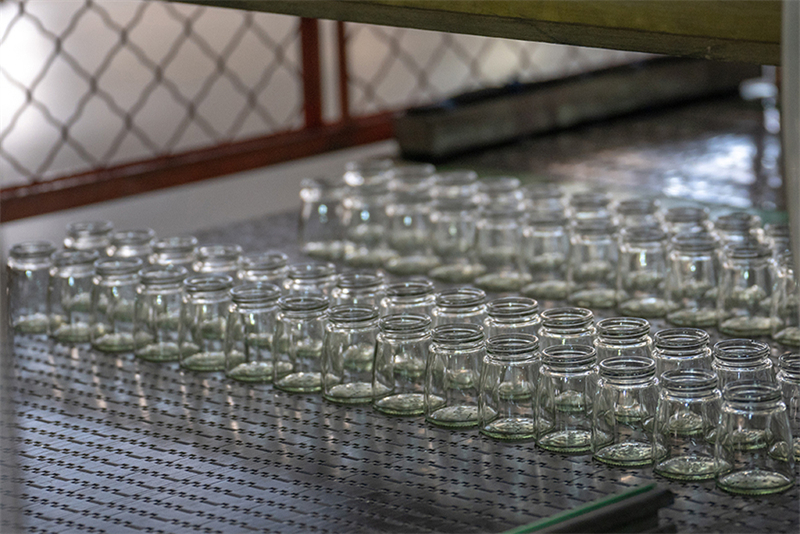
Depending on the product, the manufacturer may need to develop a new structure, create prototypes, design new tooling, test the product, and prepare it for mass production. For kitchenware with injection-molded components, new molds can become one of the most important upfront costs.
Take a salt and pepper grinder as an example. A seemingly simple grinder may contain several components that need to work together precisely. The body, cap, adjustment mechanism, grinding mechanism, internal components, and other parts all need to meet structural and functional requirements. If the entire product is developed from scratch, multiple components may require new tooling.
The cost does not stop with the mold. Engineering time, prototypes, testing, revisions, and production preparation also add to the development investment.
This creates an important distinction:
Low MOQ does not automatically mean low development cost.
A project with a small initial order can still require substantial upfront investment if it involves completely new tooling and product development. For an established brand with predictable sales, these costs can be spread across larger production volumes. For a small brand testing its first product, the same investment can represent a much larger share of its available budget. That is why choosing the right customization model matters.
ODM Can Be a More Practical Starting Point
ODM, or Original Design Manufacturing, offers a different approach.
Instead of developing every part of the product from zero, the brand starts with an existing product platform or proven design from the manufacturer. The product can then be customized according to the brand's positioning and target market.
The manufacturer may already have experience with the product's structure, tooling, production process, and quality requirements. The brand can focus its investment on the areas that matter most to its market.
For example, a kitchenware brand may customize the product's color, material, surface finish, logo, packaging, or selected exterior components while keeping a proven internal structure.
This can significantly reduce the amount of new development required.
It is important to understand that ODM does not simply mean selling a generic product with a logo added to it. A well-developed ODM program can provide multiple levels of customization.
The key difference is where the development work starts.
With full OEM, the starting point is often a new product concept.
With ODM, the starting point is an existing product foundation that can be adapted to the brand.
For a small brand, that difference can have a meaningful impact on development cost, timeline, and initial order risk.

What Can Small Brands Customize on an ODM Kitchenware Product?
A common concern with ODM is that the final product will look exactly like products already available on the market.
That does not have to be the case.
Many visible elements of a kitchenware product can be customized without redesigning the entire product. These changes can have a significant effect on how the finished product looks and how customers perceive the brand.
Color is one of the simplest examples. A brand can develop colors that match its existing product collection or use a distinctive color system across multiple kitchenware products.
Material and surface treatment can also change the character of a product. Stainless steel, glass, wood, and different types of plastics can create different visual and tactile experiences. Matte, brushed, polished, or textured finishes can further separate one product from another.
Branding is another important layer. Depending on the product and manufacturing process, manufacturers may support logo printing, laser marking, engraving, or other branding methods.
Packaging provides another opportunity for differentiation. A standard product can feel completely different when presented in packaging designed specifically around the brand's visual identity and target customer.
These changes may sound relatively small compared with developing an entirely new product. That is precisely the advantage.
A brand does not always need to redesign everything to create a product that feels like its own.

Don't Want a Standard ODM Product? Consider Partial Customization
For brands that want more differentiation than a standard ODM product can provide, partial customization is another option.
Instead of redesigning the entire product, the brand and manufacturer identify one or several components that have the greatest impact on appearance or user experience.
For a salt and pepper grinder, this could be the top cap, adjustment knob, body shape, base, decorative ring, handle, or another visible component.
The internal structure can remain based on a proven platform while a selected exterior component is redesigned.
This approach can be particularly useful when a brand has a strong design direction but does not have the budget or sales volume to justify a completely new product.
Imagine a brand likes the grinding mechanism and overall functionality of an existing grinder but feels that the exterior does not match its collection.
Instead of rebuilding the entire grinder, the brand could explore a new body shape or cap design. The manufacturer can then evaluate whether only that component needs new tooling while other components remain unchanged.
The result can be a product that looks significantly different without requiring every component to be developed again.
This is one of the most practical ways to balance innovation, development cost, and MOQ.
Of course, the actual savings depend on the product structure and the components being changed. Partial customization does not automatically eliminate tooling costs or guarantee a specific MOQ. The manufacturer needs to evaluate the design and production requirements before confirming the final cost and order quantity.
Three Ways to Approach Private Label Kitchenware
Small brands can generally think about private label development as three different levels rather than choosing between only "OEM" and "ODM."
| Development Model | Starting Point | New Tooling | Customization | Initial Investment |
|---|---|---|---|---|
| Standard ODM | Existing product | Usually limited | Basic to moderate | Lower |
| Partial Customization | Existing product platform | Selected components | Moderate to high | Moderate |
| Full OEM | New product concept | Often required | Extensive | Higher |
The right option depends on the brand's goals.
A brand testing its first product may not need a completely new product architecture. An ODM product with customized colors, materials, branding, and packaging may be enough to validate demand.
A brand that wants stronger differentiation can consider partial customization. This allows the manufacturer and brand to concentrate development resources on the parts that customers actually notice.
Full OEM becomes more relevant when a brand has a proven market, sufficient order volume, and a product concept that cannot be achieved through an existing platform.
The important point is that customization should match the stage of the business.
How Small Brands Can Keep Private Label Development Affordable
The easiest way to control development cost is not necessarily to negotiate the lowest unit price.
Instead, look at the entire development structure.
Starting with a proven product platform can reduce the amount of engineering work required. Keeping an existing internal mechanism can avoid unnecessary structural development. Limiting the number of new molds can also reduce upfront tooling investment.
At the same time, customization should focus on the elements that contribute most to product differentiation.
For a design-driven kitchenware brand, the exterior shape and surface finish may matter more than changing an internal component that customers never see. For another brand, packaging and material selection may have a greater impact on the final positioning.
This is why a good manufacturer should not simply ask, "What is your MOQ?"
A more useful discussion is:
What level of customization can we achieve at different order quantities and development costs?
That question opens the door to several possible solutions instead of forcing the project into a single OEM or ODM model.

Low MOQ Is About Reducing Market Risk
For a small brand, MOQ is not just a purchasing number.
It represents how much inventory and capital the company needs to commit before it knows whether customers will buy the product.
A large first order may reduce the unit price, but it also increases inventory risk. If the product does not perform as expected, the brand may be left with a large amount of unsold stock.
A smaller initial order allows the brand to collect real market feedback before scaling production.
This is particularly useful for new brands, new product categories, seasonal collections, and products entering an unfamiliar market.
However, a low MOQ strategy should not be reduced to simply finding a supplier willing to manufacture 100 or 200 units.
A manufacturer may offer a low MOQ but charge a high development or tooling cost. In that situation, the low order quantity does not necessarily make the project economical.
The better approach is to consider MOQ, tooling, customization, unit cost, and development cost together.
A Practical Strategy for Testing a Private Label Kitchenware Product
For many small brands, a staged approach can make more sense than jumping directly into full OEM.
Start with a proven ODM product that fits the basic requirements of your target market. Define the target price, customer profile, and product positioning before deciding how much customization is necessary.
Next, customize the elements that customers will see and interact with. Color, material, finish, branding, and packaging can establish a clear visual identity without requiring the entire product to be redesigned.
If the standard ODM design still feels too generic, identify one or two components that could make the product more distinctive. Discuss whether those components can be developed separately while keeping the rest of the product platform unchanged.
Once the sample is ready, the brand can evaluate the product from both a design and commercial perspective.
Does it look different enough from competing products?
Does the price fit the intended market?
Does the packaging communicate the brand correctly?
Does the product offer a clear reason for customers to choose it?
These questions should be answered before committing to larger production volumes.
Once the product has demonstrated market potential, the brand can increase order quantities or move toward deeper OEM development.
This creates a natural progression:
Proven ODM → Customized ODM → Partial Customization → Full OEM
Not every brand needs to move through every stage. The point is to avoid making the largest development investment before the market has validated the product.
What to Ask a Private Label Kitchenware Manufacturer
Before starting a private label project, small brands should understand exactly what the kitchenware manufacturer can customize and what those changes will require.
Instead of asking only for a product catalog and MOQ, ask how the manufacturer handles different levels of customization.
For example, you can ask:
-
Which existing ODM products are available for private labeling?
-
What can be customized without developing new molds?
-
Which components can be redesigned independently?
-
What happens to the MOQ when a new mold is required?
-
Can prototypes be developed before mass production?
-
What are the development and sampling costs?
-
Can materials, colors, finishes, logos, and packaging be customized?
-
What product testing and food-contact certifications are available?
-
Can the manufacturer support larger production volumes if the product performs well?
The answers will tell you much more about a supplier's capabilities than a low MOQ alone.
A supplier that can support ODM, partial customization, and full OEM gives small brands more room to adjust their strategy as the business develops.
How an Experienced Manufacturer Can Support Small-Batch Private Label Projects
The flexibility of a private label project depends heavily on the manufacturer's development and production capabilities.
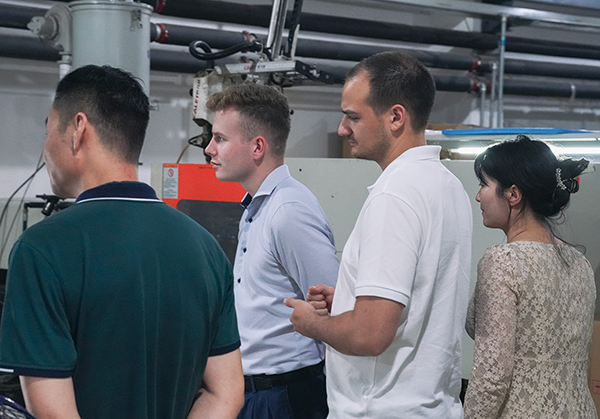
A manufacturer with an in-house R&D team can evaluate whether a brand's idea requires a completely new product or whether it can be achieved by modifying an existing product platform.
This distinction can save both time and development costs.
For kitchenware products such as salt and pepper grinders, the manufacturer should also understand the relationship between product design, grinding performance, materials, tooling, assembly, and quality control. A visually attractive design still needs to work reliably in mass production.
An experienced manufacturer can help identify which components should remain unchanged and which components are worth developing specifically for the brand.
For small brands, this can turn product development from a simple "custom or standard" decision into a more flexible process.
At ChefsHere, private label projects can be developed through ODM, partial customization, or full OEM development depending on the product and brand requirements. Customization can include materials, colors, surface finishes, logos, product dimensions, product combinations, and packaging.
For suitable projects, MOQ may start around 500–1,000 units, depending on the product and customization requirements. An in-house R&D team, production capabilities, quality control processes, and experience with international kitchenware markets allow projects to be evaluated from both design and manufacturing perspectives.
The goal is not to push every small brand toward a fully customized product.
It is to find the level of customization that makes commercial sense for the brand's current stage.
Final Thoughts: Start Small, Customize Strategically, Scale with Confidence
Private label does not have to mean choosing between a completely generic product and an expensive product developed from scratch.
For small kitchenware brands, ODM provides a practical starting point. Partial customization can add another layer of differentiation by allowing the brand to redesign selected components while retaining a proven product foundation.
Full OEM still has an important role when a brand needs a completely original product and has enough expected volume to support the development investment.
The key is to match the development model with the business stage.
A small brand does not necessarily need to spend heavily on tooling before testing an idea. By starting with a proven product, customizing the elements that matter most, and developing new components only where they create real value, a brand can create a more distinctive product while keeping its initial investment under control.
The goal of a low-MOQ strategy is not simply to buy fewer products. It is to reduce the amount of capital committed before the product has proven itself in the market.
If your brand needs custom stainless steel salt and pepper grinders, Chinagama salt and pepper grinder manufacturer is worth a conversation. The company brings 30-plus years of manufacturing experience, supports OEM&ODM customization, and backs projects with an experienced R&D team from start to finish. Quality isn't a gamble either — as a spice grinder supplier to OXO, Salter, and Gefu, Chinagama runs a strict quality management system.
Contact us for customization details and a quote.

